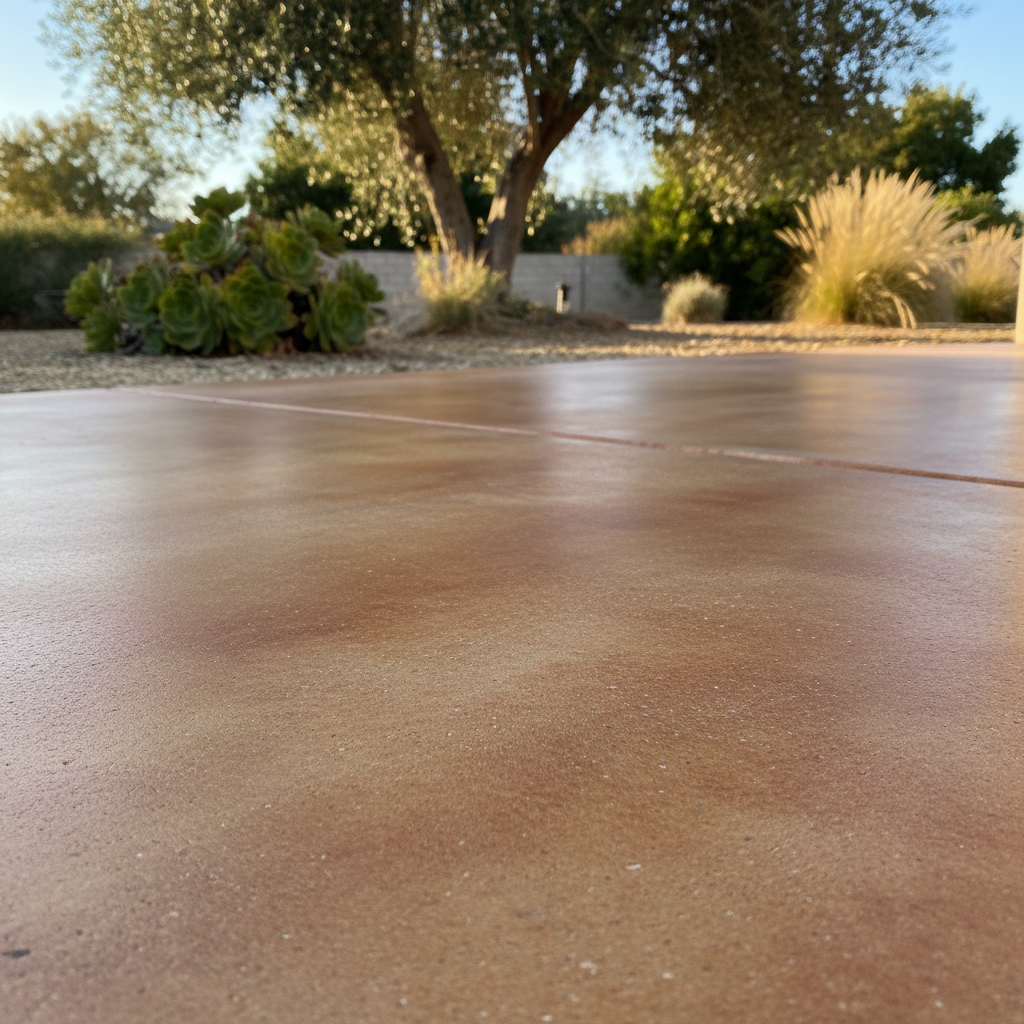
Thinking about concrete staining for your patio, driveway, or even your indoor floors right here in Santa Barbara? Good. It's a fantastic way to turn plain concrete into something really special. But I know you've got questions — everyone does. I've been doing this for years, and trust me, I've heard 'em all. So, let's just talk straight about concrete staining.
What's the difference between acid stain and water-based stain?
This is probably the most common question I get asked. Both color concrete, sure, but they do it in completely different ways. And the results? Pretty distinct. Acid stains, sometimes called reactive stains, aren't really paint. They're actually a mix of metallic salts, acids, and water. When you put them on concrete, the acid reacts with the free lime in the concrete. This chemical reaction creates a permanent, translucent color that's totally unique to that specific slab. Think of it like a watercolor painting – you get mottled, varied tones, and honestly, you can't predict the exact outcome. That's part of its charm; it looks natural, almost like stone or aged leather. It penetrates deep, so it won't chip or peel off.
Water-based stains, on the other hand, are more like a very thin, penetrating paint. They don't react chemically with the concrete at all. Instead, they deposit microscopic pigment particles right into the concrete's pores. With water-based stains, you get a much more consistent, uniform color. Plus, they come in a wider range of colors, including brighter, bolder hues that you just won't get from acid stains. If you want a specific, predictable color, water-based is often the way to go. Both types need to be sealed, but the final look is definitely different.
Can you stain existing concrete, or does it have to be new?
Absolutely, you can stain existing concrete! In fact, most of the staining work we do at Santa Barbara Concrete Contractors is on slabs that have been there a while. The key, though, is the condition of that existing concrete. It needs to be clean, totally free of sealers, paint, grease, or anything else that would stop the stain from soaking in. If you've got a patio that's been there for 20 years, covered in grime and old paint splatters, we'll need to do some serious cleaning and prep work. Sometimes, if there's an old sealer, we might even need to strip it or lightly grind the surface to open up those pores. Cracks and major imperfections? They'll still show through the stain, which can be part of the character, or something we might need to address with patching first. New concrete is often easier to stain because it's usually cleaner, but old concrete can definitely be transformed.
How long does stained concrete last, and what about maintenance?
When it's applied and sealed correctly, stained concrete is incredibly durable. The color itself, especially with acid stains, is permanent because it becomes part of the concrete. The lifespan of the *look* mostly depends on the sealer. For outdoor areas like driveways or patios that get a lot of sun and foot traffic, you might need to re-seal every 2-5 years. Indoor floors in a low-traffic area could easily go 5-10 years or even longer between re-seals. The sun we get here in Santa Barbara can be tough on sealers, so a good quality, UV-resistant sealer is a must-have.
Maintenance is pretty straightforward. For interior floors, regular sweeping and damp mopping with a mild, non-abrasive cleaner is usually all it takes. For exterior surfaces, an occasional sweep and hose down, maybe a light scrub with a brush and mild detergent for tougher spots. Just avoid harsh chemicals or abrasive cleaners, as they can wear down the sealer over time. Honestly, it's one of the lowest-maintenance flooring options out there.
Will staining hide imperfections in my concrete?
This is a common misconception, actually. Staining doesn't hide imperfections; it often highlights them. Think of it this way: if your concrete has cracks, divots, or repairs, the stain will penetrate those areas differently, making them stand out. Acid stains, especially, will react uniquely to patched areas or where different aggregate is exposed. This isn't always a bad thing; sometimes, these variations add to that natural, aged look. But if you're really looking for a perfectly uniform, blemish-free surface, staining might not be the best choice unless you fix those imperfections beforehand. We can certainly patch and repair, but those repairs will likely still be visible, just colored.
What colors can I choose from?
The color palette depends heavily on whether you go with acid or water-based stains. Acid stains typically offer earthy, muted tones: browns, tans, terra cottas, greens, and blues. The exact shade will vary based on the concrete's composition, too. It's not like picking a paint chip; you're looking at a range of possibilities. Water-based stains give you a much broader spectrum, including grays, blacks, whites, and even vibrant colors like reds and purples. You can also layer water-based stains to create custom looks. We often recommend doing a small test patch on your actual concrete, especially with acid stains, just so you can see how it reacts before committing to the whole project. The soil composition around Santa Barbara, particularly the clay-rich areas in places like Montecito or the foothills, can sometimes influence the concrete's lime content, which in turn can subtly affect acid stain reactions – making test patches even more important, don't you think?
Is stained concrete slippery?
Not necessarily. The slipperiness of stained concrete really comes down to the sealer, not the stain itself. A high-gloss sealer on a smooth surface can definitely be slick, especially when wet. For outdoor areas, or any place where slip resistance is a concern (like a pool deck or a busy walkway), we always recommend adding an anti-slip additive to the sealer. These are tiny, clear, grit-like particles that get mixed into the topcoat of the sealer. They create a textured surface that provides much better traction without significantly changing the look of the stain. It's a simple, effective solution for safety.
Hopefully, this clears up some of your biggest questions about concrete staining. It's a versatile, beautiful option for many homes, and when done right, it really adds value and character to your property.