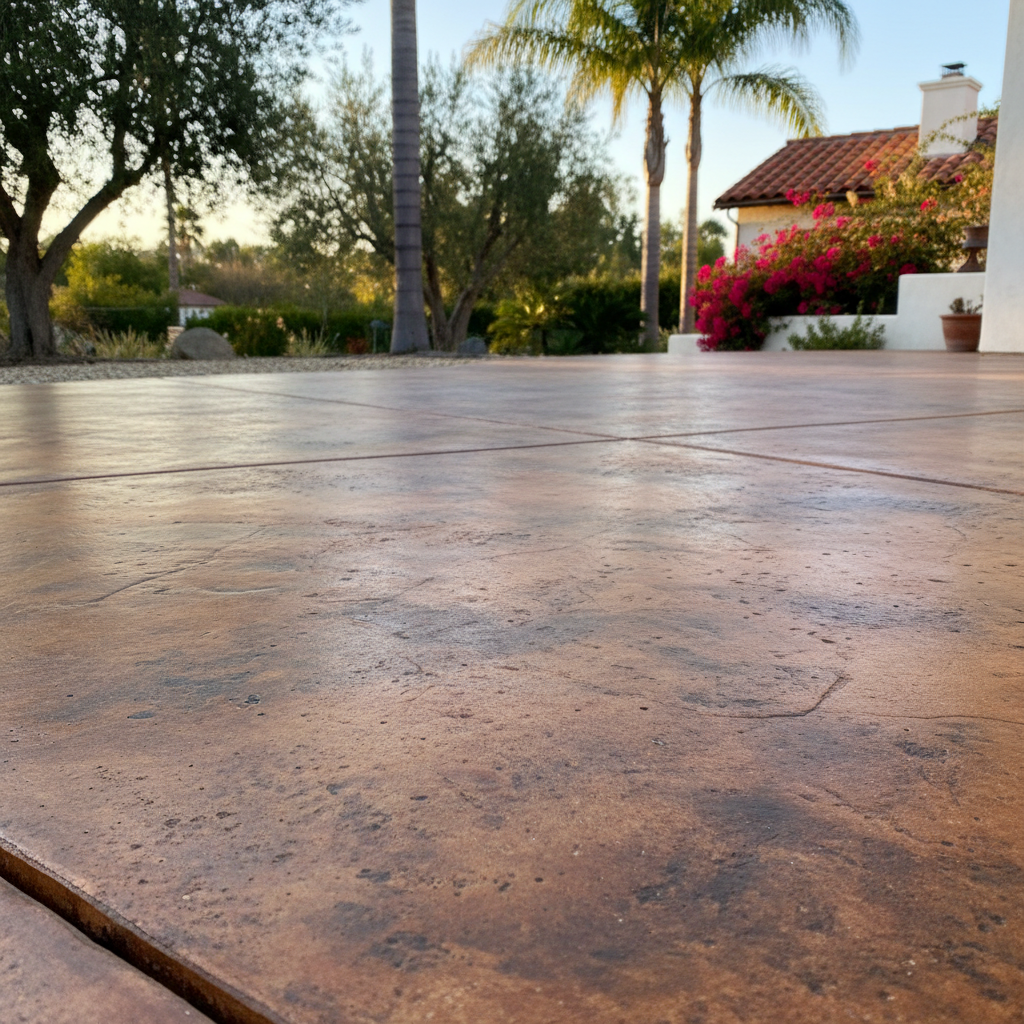
Thinking About Staining Your Concrete?
So, you're looking at that plain gray concrete patio or walkway and thinking, "There's got to be a better way." You're right, there is! Concrete staining can totally transform a space, giving it a rich, custom look that paint just can't match. But before you dive in, let's talk about what's involved, what you can realistically do yourself, and when it's time to call in someone like us at Santa Barbara Concrete Contractors.
Before You Even Think About Stains
First things first: what kind of concrete are we even talking about? Staining works best on unsealed, unpainted, and generally unblemished concrete. If your slab has a bunch of old paint, sealers, or deep cracks, you've got some serious prep work ahead of you. And I mean *serious* prep work. Any old coatings need to be stripped completely. Any repairs need to be done right, because the stain won't hide them; nope, it'll highlight them.
You also need to think about how old your concrete is and its general condition. Older concrete, especially stuff that's been exposed to the elements for years, might have variations in porosity. This means the stain could absorb differently in various spots, leading to an inconsistent finish. That's not always a bad thing – it can give it character – but it's something to be aware of. If you've got a newer slab, say less than a year old, you might need to wait a bit for it to fully cure before staining.
Another big one: clean, clean, clean. You can't just hose it down. You'll need to power wash it, degrease it, and often etch it lightly to open up the pores. Any dirt, oil, or grime will prevent the stain from penetrating properly. This isn't a step to skimp on. I've seen too many DIY jobs go sideways because someone rushed the cleaning.
Choosing Your Stain: Acid vs. Water-Based
There are two main types of concrete stains you'll run into: acid-based and water-based.
- Acid Stains: These react chemically with the free lime in the concrete, creating translucent, mottled, and often earthy tones. Think browns, greens, and blues. The color isn't applied; it's created *within* the concrete itself. This means every slab will react a little differently, giving you a truly unique look. They're durable and won't fade or chip like paint. But, they're tricky to apply, and you're dealing with acids, so safety gear is a must. The color results can be a bit unpredictable, which is part of their charm but also a challenge for a DIYer.
- Water-Based Stains: These are more like a translucent paint. They don't react chemically but rather penetrate the surface. You get a wider range of colors, and the results are generally more consistent and predictable. They're easier and safer to apply for a homeowner, and clean-up is simpler. However, they might not offer the same deep, variegated look as acid stains, and some might not be as UV stable over the long haul, especially here in sunny Santa Barbara.
For a DIY project, I'd generally lean towards water-based stains unless you're very confident and have a small, non-critical area to experiment on. The predictability is a huge plus.
The DIY Line: When to Call a Pro
Look, I'm all for homeowners tackling projects. It's rewarding. But there's a point where you need to know your limits. Here's my take:
- DIY Friendly: Small, unsealed, unpainted patios or walkways in good condition. If you're using a water-based stain and you're meticulous about cleaning and application, you can get a decent result. Think a small backyard path or a shed floor.
- Call a Pro: Anything large, complex, or high-visibility. If you've got a big driveway, a pool deck, or an interior floor, don't mess around. If your concrete has existing coatings, deep cracks, or significant oil stains, you'll need professional prep. Acid staining, especially if you want specific patterns or multiple colors, is definitely a pro job. We've got the specialized equipment, the experience with different concrete types (like the varied aggregate you find in some older Santa Barbara homes), and the know-how to handle the chemicals safely and effectively. We also know how to properly seal the finished product to protect it from our coastal weather and foot traffic.
During the Project: Application Tips
Whether you're DIYing or watching us work, here are a few things to keep in mind:
- Test, Test, Test: Always, always test your stain on an inconspicuous area first. A corner, underneath a planter – somewhere you won't see it if it goes wrong. This is crucial for understanding how your specific concrete will take the stain.
- Even Application: This is where a lot of DIYers struggle. You need to apply the stain evenly, without puddles or dry spots. Use a sprayer for best results, followed by a brush or roller to work it in. Overlapping your passes correctly is key to avoiding lap lines.
- Work in Sections: Don't try to do a huge area all at once. Break it down into manageable sections.
After the Stain: Sealing is Non-Negotiable
Once your stain is dry and you've neutralized any acid residue (if you went that route), the job isn't over. You absolutely, positively have to seal it. A good sealer will protect your beautiful new stained surface from wear, UV rays, and moisture. It'll also enhance the color and make it easier to clean. There are different types of sealers – acrylic, epoxy, urethane – each with their own pros and cons. We can help you pick the right one for your specific application and local conditions, by the way.
Maintenance after sealing is pretty simple: regular sweeping and occasional cleaning with a mild detergent. Avoid harsh chemicals or abrasive cleaners, as they can damage the sealer. Re-sealing might be necessary every few years, depending on traffic and sun exposure.
Stained concrete is a fantastic way to add value and beauty to your home. Just make sure you go into it with your eyes open, understand the process, and know when it's smart to pick up the phone and let the pros handle it. Give Santa Barbara Concrete Contractors a call if you're ready to explore your options.