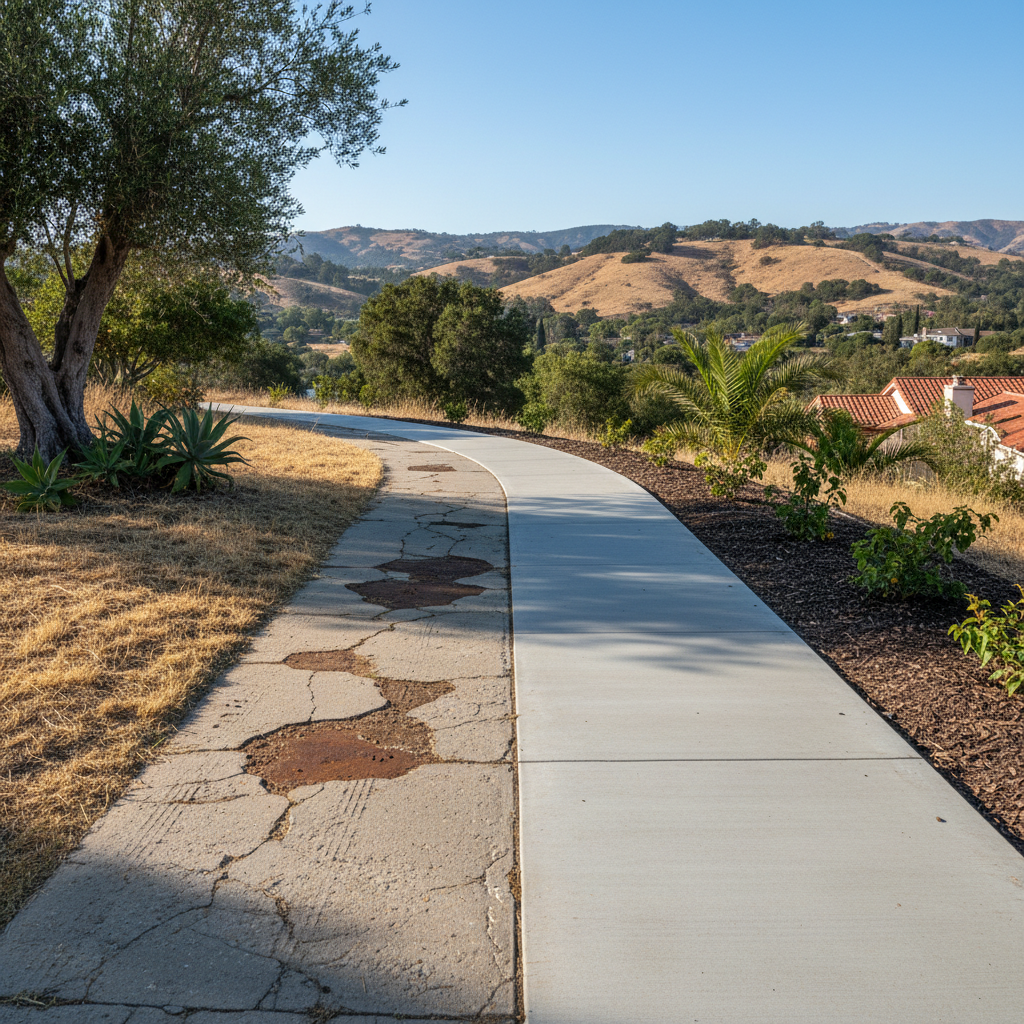
So, you're thinking about a new sidewalk, or maybe replacing that old, cracked one at your place here in Santa Barbara. Smart move. A good-looking, sturdy path really does make a difference, both for how your home looks and for keeping folks safe.
But once you start digging into it, you'll see there are two main roads you can take: the traditional poured concrete or those interlocking concrete pavers. Which one's the right fit for your home, though?
I've been pouring and laying concrete around here for years with Santa Barbara Concrete Contractors. I've seen both options in action, through our hot summers and those occasional heavy winter rains. Let's talk about the real pros and cons; that way, you can make a decision you'll be happy with.
Cost: What's the Initial Hit?
Let's be honest: cost is usually the first thing people ask about. Generally speaking, a standard poured concrete sidewalk is going to hit your wallet less hard upfront than pavers. You're dealing with simpler materials, installation that's less labor-intensive (once the forms are set and the base is ready), and fewer individual pieces to mess with.
Pavers, on the other hand, mean more material cost per square foot for the pavers themselves. Plus, there's more labor involved to lay each one individually, cut them to fit, and sweep in that joint sand. If you're just looking for a basic, no-frills sidewalk, poured concrete almost always wins on the initial price. But, if you're comparing a fancy stamped concrete sidewalk to a really basic paver one, the costs can actually get pretty close.
Durability: Built to Last?
This is where things get interesting, especially for us here in Santa Barbara. A poured concrete sidewalk, if it's installed well and cured properly, is incredibly durable. We're talking decades of service with hardly any fuss. It's one solid slab, which means fewer places for things to go wrong. The biggest enemies of poured concrete are usually ground movement, tree roots, or a poorly prepared sub-base. Any of those can lead to cracking. And once it cracks, well, that's a repair job that often means cutting out sections, or you just learn to live with the crack.
Pavers are tough too, but in a different way. They're designed to flex with ground movement because they're individual units. This means they're less likely to crack than a solid slab. If one paver gets damaged, you can usually just lift it out and replace it. That's a huge plus, right? However, the joints between pavers can cause some headaches. Weeds absolutely love to sprout there, and if you don't maintain the joint sand, the pavers can shift or settle unevenly, creating trip hazards. Also, if the base isn't prepared perfectly, pavers can sink in spots, leaving you with an uneven surface.
Maintenance: How Much Work Are You Signing Up For?
For poured concrete, maintenance is pretty straightforward. Keep it clean, maybe power wash it once in a while to get rid of dirt and mildew. If you seal it every few years, it'll look better and last longer. The big thing to watch out for is cracks. If they pop up, you'll want to take care of them to stop water from getting in and causing more damage.
Pavers generally need a bit more active maintenance. You'll need to regularly sweep or blow out debris from those joints. Weeds are a constant battle, especially in our mild climate where everything just wants to grow. You might also need to re-sand the joints every few years to keep everything locked in and prevent shifting. Sealing pavers can help cut down on weed growth and protect against stains, but that's an extra step.
Appearance: What Look Are You Going For?
Poured concrete used to be just gray and, well, boring. But not anymore! You can get it colored, stamped with patterns (like brick or stone), or even exposed aggregate. It gives you a clean, continuous look, and with stamping, you can mimic more expensive materials for less money. It's a very flexible option for getting that specific aesthetic you're after.
Pavers, by their nature, have a more textured, segmented look. They come in a huge variety of shapes, sizes, colors, and patterns, letting you create intricate designs and a more 'old-world' or custom feel. You can build borders, curves, and unique layouts that are just harder to pull off with poured concrete. For homes in areas like the Mesa, where you might want a more rustic or Mediterranean vibe, pavers can really complement the architecture.
My Recommendation for Santa Barbara Homeowners
Considering our local conditions — the occasional ground movement, the desire for low maintenance, and the need for durability — I generally lean towards a well-installed, poured concrete sidewalk for most homeowners here in Santa Barbara. Here's why:
- Lower upfront cost: It's usually the more budget-friendly way to get a solid, long-lasting path.
- Less ongoing maintenance: While pavers can be individually repaired, that ongoing battle with weeds in the joints and the need for re-sanding can be a real pain. Poured concrete, especially if sealed, is pretty much set-it-and-forget-it once it's in.
- Fewer trip hazards over time: With proper base prep and control joints, a poured slab is less likely to develop uneven spots than pavers, which can shift or settle if the joint sand washes out or the base isn't perfect.
- Versatility: You can still get a fantastic, custom look with colored or stamped concrete that really rivals the appearance of pavers, often at a better price point.
Now, don't get me wrong, pavers are a great product. If you absolutely love the look of individual stones, are willing to do the extra maintenance, and have the budget for it, they can look incredible. But for the average Santa Barbara homeowner looking for a durable, attractive, and relatively low-maintenance sidewalk that will stand the test of time, I'd recommend going with a quality poured concrete installation. Just make sure your contractor knows what they're doing with the base and expansion joints. That's key for longevity here.