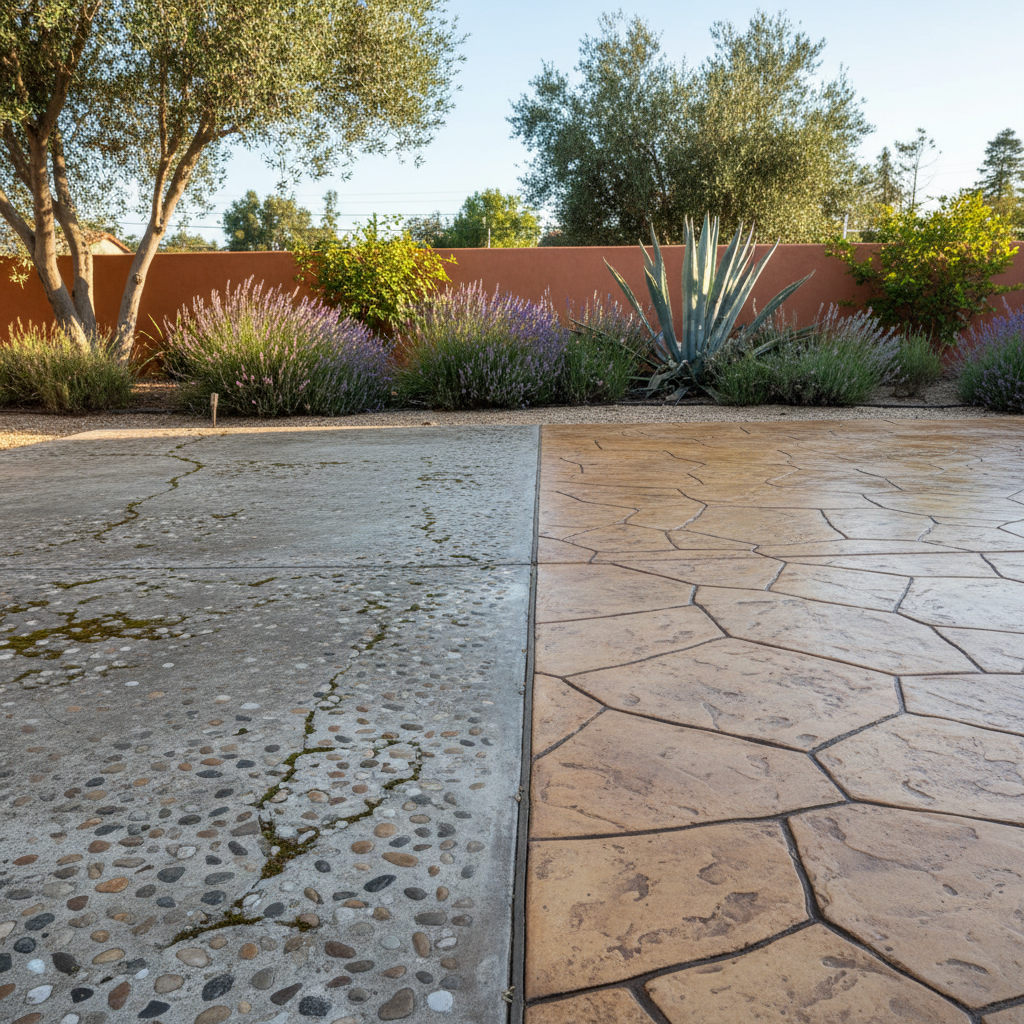
Alright, so you're thinking about stamped concrete for your place, maybe to spruce up that tired old patio or add a new walkway. It's a really smart choice for boosting curb appeal and getting a custom look. But as you dig into it, you'll probably hear about two main ways to get it done: a full pour and stamp, or a stamped concrete overlay. What's the real difference, and which one makes the most sense for you right here in Santa Barbara?
Stamped Concrete Overlay: A Quick Facelift
Let's start with overlays. Imagine an overlay as a thin layer of special concrete mix, usually about a quarter to three-eighths of an inch thick. We put this right over your existing concrete slab, then stamp it with whatever pattern and color you've picked out. It's basically giving your old concrete a fresh new skin, you know?
- Cost: Usually, an overlay will cost less upfront than a full pour. You're not paying for demolition, hauling away old concrete, or nearly as much material. It’s a pretty budget-friendly way to get that stamped look.
- Durability: Now, this is where you need to pay attention. An overlay is only as strong as the slab underneath it. If your existing concrete has big cracks, is heaving, or crumbling, an overlay won't fix those deeper structural problems. It might look good for a little while, but those issues will likely show through eventually. It really works best for concrete that's in decent shape but just looks, well, ugly.
- Maintenance: Just like any stamped concrete, it needs sealing every few years to protect it from our coastal weather and sun. If the slab underneath shifts or cracks, the overlay will too, and fixing those can be trickier than with a full pour.
- Appearance: You can get some truly beautiful results with overlays. The patterns and colors are just as varied as with a full pour. The main thing to remember is if your existing slab is very uneven, a thin overlay can only do so much to level things out.
Full Pour and Stamp: The Solid Foundation
A full pour and stamp? That's exactly what it sounds like. We're ripping out any old concrete, getting the sub-base ready (which is super important in places like the foothills where we see a lot of soil movement), pouring fresh concrete, and then stamping it while it's still wet. This is the classic, most durable way to get stamped concrete.
- Cost: This is usually the pricier option. You're paying for demolition, disposal, excavation, new rebar or mesh, and a lot more concrete. But you're also getting a brand new, custom-engineered slab, which is a big deal.
- Durability: This is its biggest advantage, no question. When it's done right, a full pour is incredibly durable. We can properly prepare the sub-base, add rebar for structural strength, and control the concrete mix. This means a much longer life and better resistance to cracking, especially with the expansive clay soils we sometimes deal with around here in Santa Barbara. It’s built to last for decades.
- Maintenance: It's similar to an overlay – it needs regular sealing. However, since the slab itself is new and structurally sound, you're less likely to face repairs because of underlying issues. Any small cracks that do pop up are usually easier to manage.
- Appearance: You get the full spectrum of patterns, textures, and colors. Plus, because it's a new pour, we have total control over the finish. We can make sure you get a perfectly level and consistent surface right from the start.
So, Which One Should You Choose?
Here's my honest opinion, having done plenty of both for Santa Barbara Concrete Contractors. If your existing concrete is in pretty good shape – maybe just discolored, stained, or a little worn – and you're on a tighter budget, an overlay can be a fantastic choice. It’s a great way to refresh a space without totally emptying your wallet.
However, if your existing concrete is cracked, uneven, has significant spalling, or if you're looking at a high-traffic spot like a driveway, I'm almost always going to recommend a full pour and stamp. Yes, it costs more initially, but you're really investing in a solution that will last much, much longer and save you a lot of headaches later on. You're getting a brand new, structurally sound surface that's built from the ground up for our specific climate and soil conditions.
Think of it this way: an overlay is like a really good paint job on an old car. It looks great, but it doesn't fix the engine, does it? A full pour is like buying a brand new car. It's a bigger investment, but you know exactly what you're getting, and it's going to perform reliably for years to come.
Ultimately, the best way to figure it all out is to have us come take a look. We can check out your existing concrete, chat about your vision, and give you a clear recommendation tailored to your specific situation and budget. Don't hesitate to reach out; we're here to help you make the right choice for your home.